
MV Barima inquiry takes family outreach to Mabaruma ahead of Wednesday’s first sitting
The Presidential Commission of Inquiry into the MV Barima tragedy took its outreach programme to Region One on Monday, meeting families and survivors at the Mabaruma Waterfront — the first of two hinterland sessions before formal evidence-taking begins on Wednesday.
Monday’s 10 a.m. session, announced over the weekend, caps the Commission’s opening week in Georgetown: a formal opening last Wednesday, October 7, followed by site visits to the Kingston wharf, the Maritime Administration Department and the Transport and Harbours Department on Thursday, and two East Bank of Demerara dry-dock facilities associated with the vessel’s maintenance on Friday.
The Commission travels to Port Kaituma on Tuesday for the same programme — a 10 a.m. meeting at the Community Centre — before returning to Georgetown for its first sitting on Wednesday at the Arthur Chung Conference Centre, where hearings are scheduled from 9 a.m. to 4 p.m., Monday to Friday.
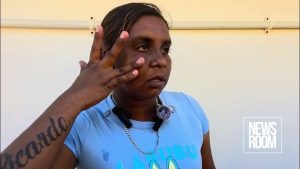
By Monday evening, coverage of the session had emerged. Reporters described a full community hall in Mabaruma, where the five commissioners faced survivors and relatives seated at classroom-style desks. Several survivors gave emotional accounts of the night of July 18 — the engine failing, water coming in below, the vessel capsizing, and hours spent in the water before rescue. Attendees also pressed the commissioners on compensation for families of those still missing; an official estimated the process could take about six months and noted that an independent company, not the government directly, is reviewing compensation claims.
Chairman Justice Godfrey Phillip Smith told the group the commission’s task is to investigate what went wrong, identify mistakes and determine accountability, stressing that although the commissioners are appointed by the President, they are not part of the government. The commissioners also inspected the waterfront and the Guyana Marketing Corporation’s Kumaka Packaging Facility during the Mabaruma visit.
Last week’s coast session at the conference centre drew about 120 survivors and relatives, some of whom pressed the commissioners on the delayed salvage of the wreck and whether the inquiry would examine the vessel’s maintenance and inspection history. Separately, the National Procurement and Tender Administration Board has since awarded the salvage contract to B.K. International Inc. on a “no cure, no pay” basis, with reports putting the value at about $1 billion.
More than 100 witnesses are expected when hearings begin. The Commission, chaired by Justice Godfrey Phillip Smith, will submit its findings, observations and recommendations to President Dr Mohamed Irfaan Ali, with an initial estimate of about six months for the final report.
Tuesday’s session at the Port Kaituma Community Centre drew 30 affected families and survivors, where the five commissioners explained the inquiry’s objectives, answered questions about its scope, and encouraged those with firsthand knowledge to give evidence. The commissioners assured attendees that appropriate arrangements would be made for those who choose to testify at the hearings in Georgetown.
Among those attending was Anndya Deally, who lost her 16-year-old son, Andriel Bautista, in the sinking. Wearing a T-shirt bearing his photograph, she thanked the commissioners for visiting Port Kaituma — the vessel’s intended destination — and recounted the night of the disaster. Survivor Ramrattan Doodnaut, 67, welcomed the engagement, saying the commissioners needed a clear understanding of what happened that night, and said he looked forward to further interaction with the inquiry.
The Commission opened substantive hearings on Wednesday at the Arthur Chung Conference Centre in Georgetown, turning first to the emergency response to the vessel’s distress signals. The first witness called was Rickford Samaroo, the Guyana Civil Aviation Authority’s Director of Air Navigation Services, who explained how distress beacons are picked up through the international Cospas-Sarsat satellite system and relayed from the United States Mission Control Centre in Maryland to the GCAA’s Aeronautical Information Unit at the Timehri control tower. He told the Commission the beacon record available on the night did not identify the MV Barima, so the duty officers could not immediately tell which vessel was in distress.
Tia Valenzuela, who was on duty in the control room at the Cheddi Jagan International Airport when the alerts came in, testified that the initial alert was transmitted at 10:43 p.m. on July 18 and that six further distress messages followed while she plotted the coordinates. She said she relayed the coordinates to the GDF Coast Guard through WhatsApp at 10:51 p.m. and received a reply at 10:52 p.m.
The Commission has asked for the standard operating procedures, an after-action report and the full communications record as it examines the emergency-response timeline.
On the second day of hearings on Thursday, the Commission heard from the crews who joined the overnight search. Roraima Airways pilot Captain Learie Barclay, the fourth witness called, testified that he received a call for aerial-search help at 12:16 a.m. on July 19, reached the search area near Hampton Court at about 1:56 a.m., and — after spotting a bright flare and following the emergency locator signal — pinpointed the location where the vessel had sunk at 2:09 a.m., relaying the coordinates to the authorities. Ten survivors were rescued within minutes of the location being identified, the inquiry heard. Barclay told the commissioners the aircraft could not spot the vessel or anyone in the water from the air that night, and said improved technology — such as forward-looking infrared equipment — would strengthen future nighttime search-and-rescue operations.
Lieutenant (Coast Guard) Rolwyn Heywood, the weekend duty officer at Coast Guard headquarters in Ruimveldt, testified that the EPIRB distress alert reached him through regional channels at 10:51 p.m. on July 18. He plotted the beacon about 8.25 nautical miles off the Essequibo Coast, directed the Pomeroon base to the location by 11:10 p.m., and joined the 54-metre GDFS Shahoud, which sailed at about 3:30 a.m. with a weekend crew recalled from across the country. At 7:30 a.m., the Shahoud met a fishing vessel carrying 11 survivors and two police ranks, then took command of a scene that grew to six Coast Guard vessels and 12 civilian boats, while heavy rain and mist held night visibility to about 500 yards. GDF Air Corps pilot Lieutenant Colonel Anson Weekes told the inquiry he searched the coastline by searchlight overnight in a Bell 407, flew two search sorties with Omni Helicopters at daybreak, and that Regional Security System aircraft from Barbados joined the effort that evening.
Hearings continue Monday to Friday.
About The Author